LOGO
Investment Objective
The Alpha Brands™ Consumption Leaders ETF (the “Fund”) has a primary investment objective to seek long-term capital appreciation. The Fund’s secondary investment objective is to seek to preserve capital during adverse market conditions.

Get an actively managed portfolio of many of the most admired, blue-chip brands

Own the Brands You Trust.
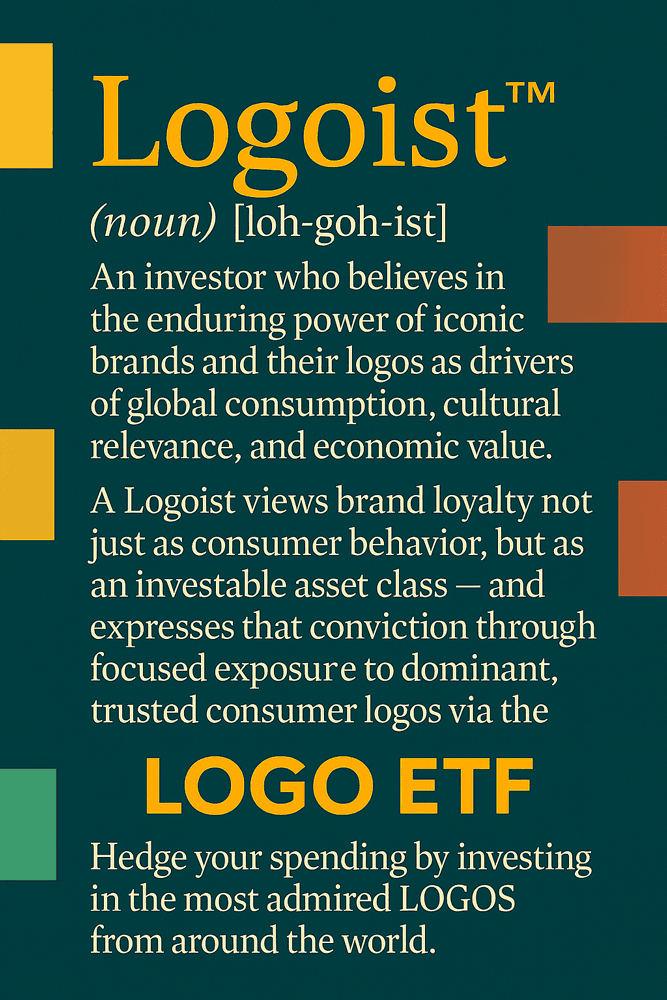
Invest Like a Logoist.
LOGO Sits at the Cross-Section of Brand Loyalty & Long-Term Investing.
Every day, billions of people make purchase decisions based on one key thing: the logo. Here’s a stat that’s eye-opening: Household consumption and business innovation spending around the globe accounts for $60+ trillion a year (McKinsey & Co., 2024). No other theme is larger than global consumption. From the sneakers we lace up to the platforms we stream on, trusted brands guide our choices. The LOGO ETF gives you exposure to the world’s most admired logos — powerful brands that dominate global consumption, culture, and mindshare.
Being a Logoist means more than brand loyalty — it’s about brand ownership. It’s the belief that the companies shaping our daily lives also belong in our portfolios. The LOGO ETF brings this idea to life by investing in dominant, consumer-facing companies that consistently earn attention, trust, and dollars around the world. And that’s not all. LOGO also invests in the global innovation spending boom as technology and AI remain at the center of everything. This is a theme that should not be avoided in your portfolio.
Bonus: The largest wealth transfer in history has just begun. Cerulli & Associates (2024) recently released a report estimating $2.5 trillion per year and growing will be added to the net worth of those inheriting over $100 trillion in wealth over the next 3 decades. What do consumers do when they have extra money? They tend to spend, save, and invest more. Mega Brands benefit disproportionately because they have earned our trust and loyalty.
Invest Like a Logoist by owning the LOGO ETF.
Fund Documents
Logo Materials
About Us
The sub-advisor for the LOGO ETF is Accuvest Global Advisors. Accuvest is a SEC-registered Registered Investment Advisor with $1.2 B in discretionary assets under management as of 6/30/2025. Accuvest is a subsidiary of Mosaic (MIG Inc), a global financial products and services company comprised of entities operating in multiple jurisdictions around the world. The firm traces back to 1983 with private banking roots. Today, the Mosaic Platform in aggregate, has nearly $5.6 billion in assets offering a comprehensive suite of financial products and services.
Portfolio Management Team:

David Garff
CEO
David serves as the President and CEO of Accuvest Global Advisors. He is a member of the Investment Committee. David graduated with a B.A. in Economics and Spanish Translation from Brigham Young University, and a master’s degree in Business Administration, with a concentration in Finance, from the Haas School of Business at the University of California, Berkeley. David began his investment career in 1992 with Merrill Lynch, and then spent 10 years as a consultant with Smith Barney, serving the needs of affluent families, Foundations and Endowments. In 2005, David founded Accuvest to help his clients navigate increasingly complex global markets. He has been featured on TV, radio and in print media with Bloomberg, CNBC, Fox Business, Wall Street Journal, Morningstar and Barron’s.

Eric Clark
CIO
Eric serves as the Chief Investment Officer for Accuvest Global Advisors. He is a member of the Investment Committee. Eric is a brand logoist at his core. Eric’s responsibilities include research, investment analysis, technical analysis, macroeconomic commentary, and portfolio strategy & implementation. Eric also leads the sales, marketing & distribution efforts of the Alpha Brands suite of investment strategies. Eric has over three decades of investment experience and started his career at Merrill Lynch in 1993. He graduated with a B.A. in Urban Planning with an emphasis on Real Estate & Economics from the University of Maryland, College Park. Eric is a frequent guest across top media outlets including CNBC, Bloomberg, Reuters, Wedbush, and The Schwab Network.
Key Features & Facts of LOGO ETF
Persistent exposure to: Quality, High Profitability, Operational Efficiencies, Economic Moats, and visionary management teams.
A core equity ETF correlated to the core driver of the global economy.
Actively Managed. Risk Managed.
High Tracking Error. Agnostic to Size, Style, Geography
Diversified across important consumption sectors and industries
Exposures tied to the business cycle
A portfolio tied to the brands that drive our everyday lives
Media & Ongoing Portfolio Updates

Launch Episode for LOGO: Why global consumption. Why Global Brands. Why a Risk Managed Approach.


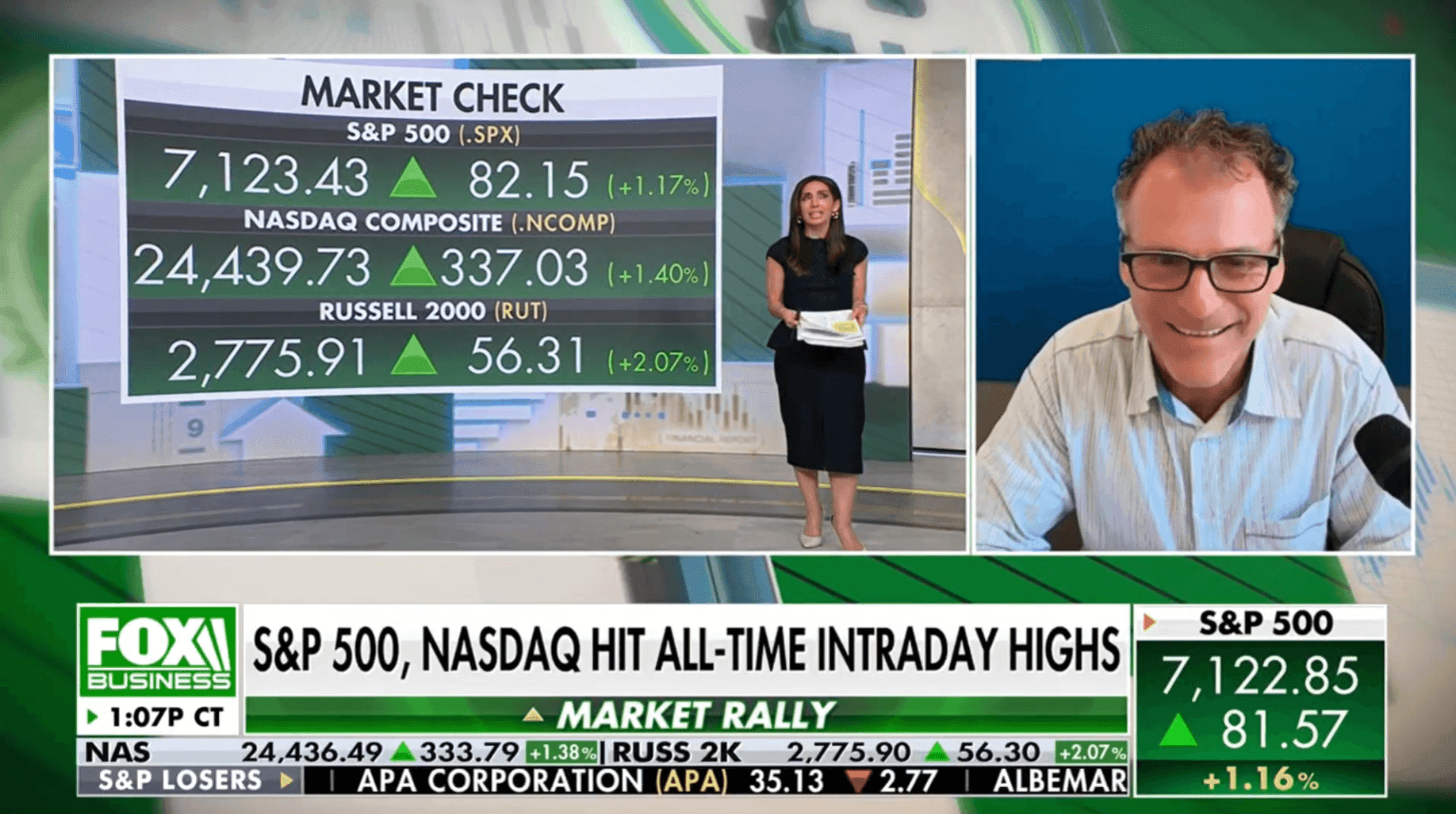
LOGO ETF Portfolio Manager on CNBC talks about the state of the consumer & leading retail brands
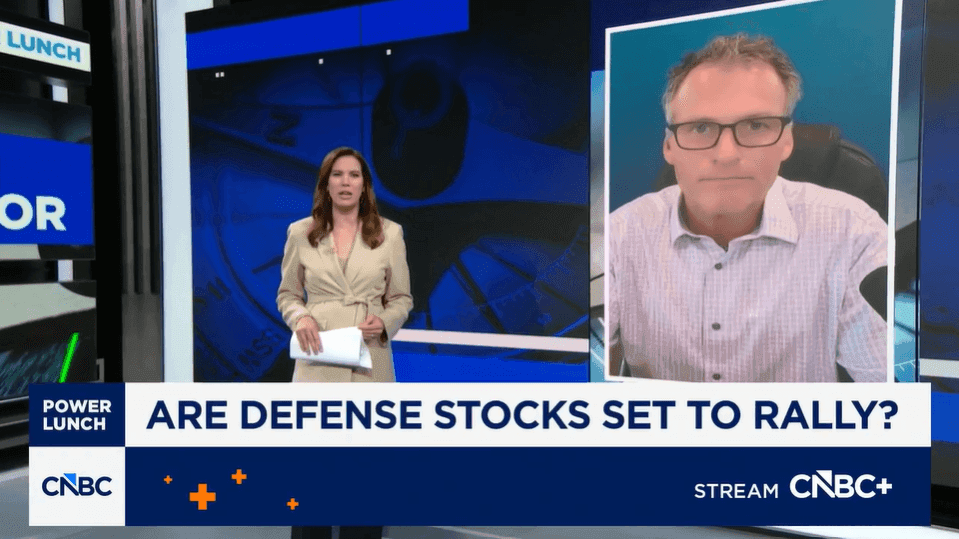
LOGO ETF Portfolio Manager Talks About the Opportunity in the Military Defense & Public Safety Tech Sectors
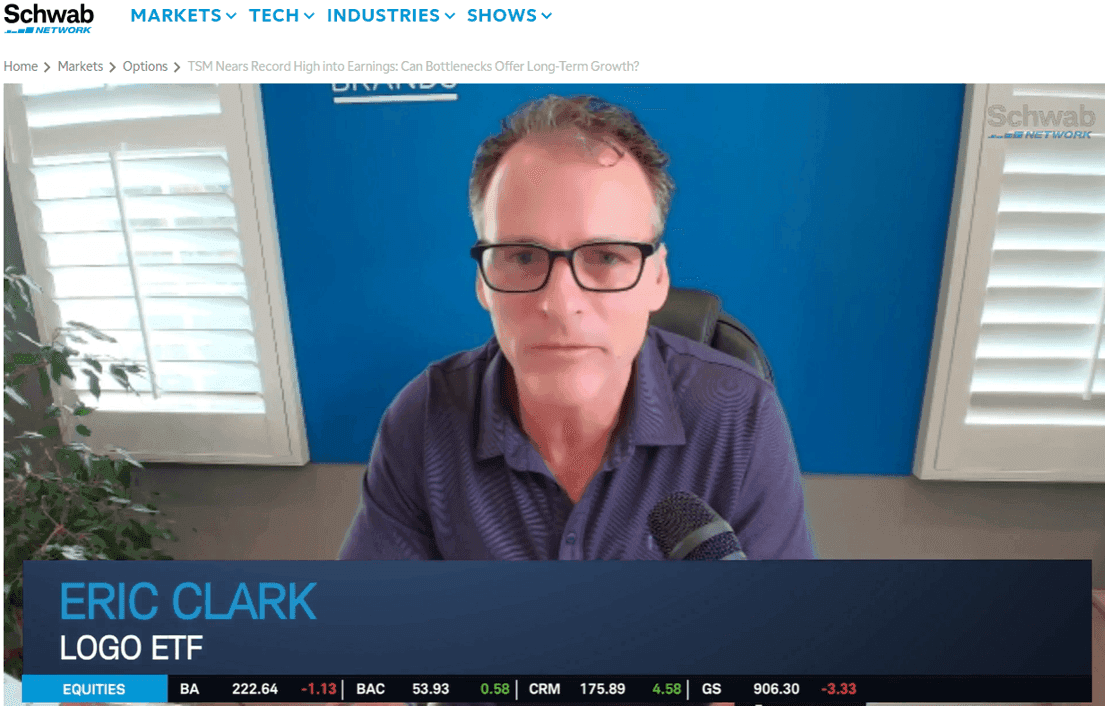
LOGO ETF Portfolio Manager Talks About the AI Trio Owned in LOGO, including TSM and Earnings
LOGO ETF Exposures
Understanding the business cycle is vital to portfolio positioning decisions. When the economy is performing well, and consumers are spending more broadly, LOGO will generally have more exposure to economically sensitive Alpha Brands (Offense). When the economy is slowing and/or macro events are creating a headwind to economic growth, LOGO will generally have increased exposure to defensive business models (Defense). Why? In times of high market turmoil, money tends to rotate toward brands more focused on “the staples of life” than those tied to broad discretionary spending. Being able to toggle between offense and defense is a key differentiator for LOGO.
LOGO STYLE BOX EXPOSURE
LOGO Current Portfolio Positioning
Proprietary Market Risk Assessment
Defensive
Lower Beta Brands
Offense
Growth-Oriented Brands
Global Consumption Exposures
LOGO Current Macro Risk Indicators
Informs LOGO Exposures
GDP & Labor Markets
Economic Growth
Fundamentals
Corporate Earnings
Contrarian Signal
Investor Sentiment
Accommodative/Restrictive
Central Bank Policy
10 Month Moving Average
Technical Price Levels
Trajectory
Interest Rates
ROC Matters
Inflation
Extremes
Equity Valuations
Warning Signs
Cross-Asset Volatility
Widening Matters
Credit Spreads
Sign Up for Latest Updates
Investors should consider the investment objectives, risks, charges and expenses carefully before investing. For a prospectus or summary prospectus with this and other information about the Fund, please call (855) 907-7444 or visit our website at www.logoetf.com. Read the prospectus or summary prospectus carefully before investing.
Equity Market Risk. By virtue of the Fund’s investments in equity securities, the Fund is exposed to common stocks which subjects the Fund to equity market risk. Common stocks are generally exposed to greater risk than other types of securities, such as preferred stock and debt obligations, because common stockholders generally have inferior rights to receive payment from specific issuers. Equity securities may experience sudden, unpredictable drops in value or long periods of decline in value.
Foreign Securities Risk. Investments in securities or other instruments of non-U.S. issuers involve certain risks not involved in domestic investments and may experience more rapid and extreme changes in value than investments in securities of U.S. companies. Financial markets in foreign countries often are not as developed, efficient, or liquid as financial markets in the United States, and therefore, the prices of non-U.S. securities and instruments can be more volatile.
Economic and Market Risk. Economies and financial markets throughout the world are becoming increasingly interconnected, which increases the likelihood that events or conditions in one country or region will adversely impact markets or issuers in other countries or regions. Securities in the Fund’s portfolio may underperform in comparison to securities in the general financial markets, a particular financial market, or other asset classes, due to a number of factors, including inflation (or expectations for inflation), deflation (or expectations for deflation), interest rates, global demand for particular products or resources, market instability, financial system instability, debt crises and downgrades, embargoes, tariffs, sanctions and other trade barriers, regulatory events, other governmental trade or market control programs and related geopolitical events.
Models and Data Risk. The Sub-Adviser’s evaluation of potential Fund portfolio holdings is heavily dependent on proprietary quantitative models as well as information and data supplied by third parties (Models and Data). When Models and Data prove to be incorrect or incomplete, any decisions made in reliance thereon may lead to the inclusion or exclusion of securities from the Fund’s portfolio that would have been excluded or included had the Models and Data been correct and complete.
New Fund Risk. The Fund is a recently organized management investment company with no operating history. As a result, prospective investors do not have a track record or history on which to base their investment decisions.
Beta is a measure that reflects how strongly a stock’s price tends to move in relation to the broader market’s movements. It helps investors estimate how much a stock might amplify or dampen the market’s ups and downs when added to a portfolio.
Alpha is a measure of an investment’s performance that indicates its ability to generate returns in excess of its benchmark.
ROE: Return on equity (ROE) is a financial performance ratio that demonstrates how it uses shareholders’ equity to generate net income. It is calculated by dividing net income by shareholders’ equity.
EPS: Earnings per share (EPS) is a commonly used measure of a company’s profitability. It indicates how much profit each outstanding share of common stock has earned. Generally speaking, the higher a company’s EPS, the more profitable it is considered to be.
Free Cash Flow: Free cash flow (FCF) is the cash a company has left after spending money to support and maintain its operations and capital assets.
Tracking Error: Tracking error is the divergence between the price behavior of a position or a portfolio and the price behavior of a benchmark. This is often in the context of a hedge fund, mutual fund, or exchange-traded fund (ETF) that did not work as effectively as intended, creating an unexpected profit or loss. Tracking error is reported as a standard deviation percentage difference, which reports the difference between the return an investor receives and that of the benchmark they were attempting to imitate.
EBITDA: EBITDA, short for earnings before interest, taxes, depreciation, and amortization, is an alternate measure of profitability to net income. It’s used to assess a company’s profitability and financial performance.
Nasdaq is a global electronic marketplace for buying and selling securities. Its name was originally an acronym for the National Association of Securities Dealers Automated Quotations. Nasdaq started as a subsidiary of the National Association of Securities Dealers (NASD), now known as the Financial Industry Regulatory Authority (FINRA). Nasdaq was launched after the Securities and Exchange Commission (SEC) urged NASD to automate the market for securities not listed on an exchange. The result was the first electronic trading system. Nasdaq opened for business in 1971.
DOW: The term “Dow" refers to the Dow Jones Industrial Average (DJIA), a stock market index that tracks the performance of 30 large, publicly owned companies in the United States. It’s a widely used benchmark to gauge the overall health and direction of the US stock market.
Russell 2000 Index is a stock market index that measures the performance of the 2,000 smaller companies included in the Russell 3000 Index. The Russell 2000 is managed by London’s FTSE Russell Group, widely regarded as a bellwether of the U.S. economy because of its focus on smaller companies in the U.S. market.
VIX: The CBOE Volatility Index (VIX) is a real-time index that represents the market’s expectations for the relative strength of near-term price changes of the S&P 500 Index (SPX). Because it is derived from the prices of SPX index options with near-term expiration dates, it generates a 30-day forward projection of volatility.
Capital expenditures (CapEx) are the funds companies allocate to acquire, upgrade, and maintain essential physical assets like property, technology, or equipment, crucial for expanding operational capacity and securing long-term economic benefits.
Foreside Fund Services, LLC Distributor
©2026 All rights reserved.